To the five-minute signal17:43
The Window 01
Seventeen Minutes
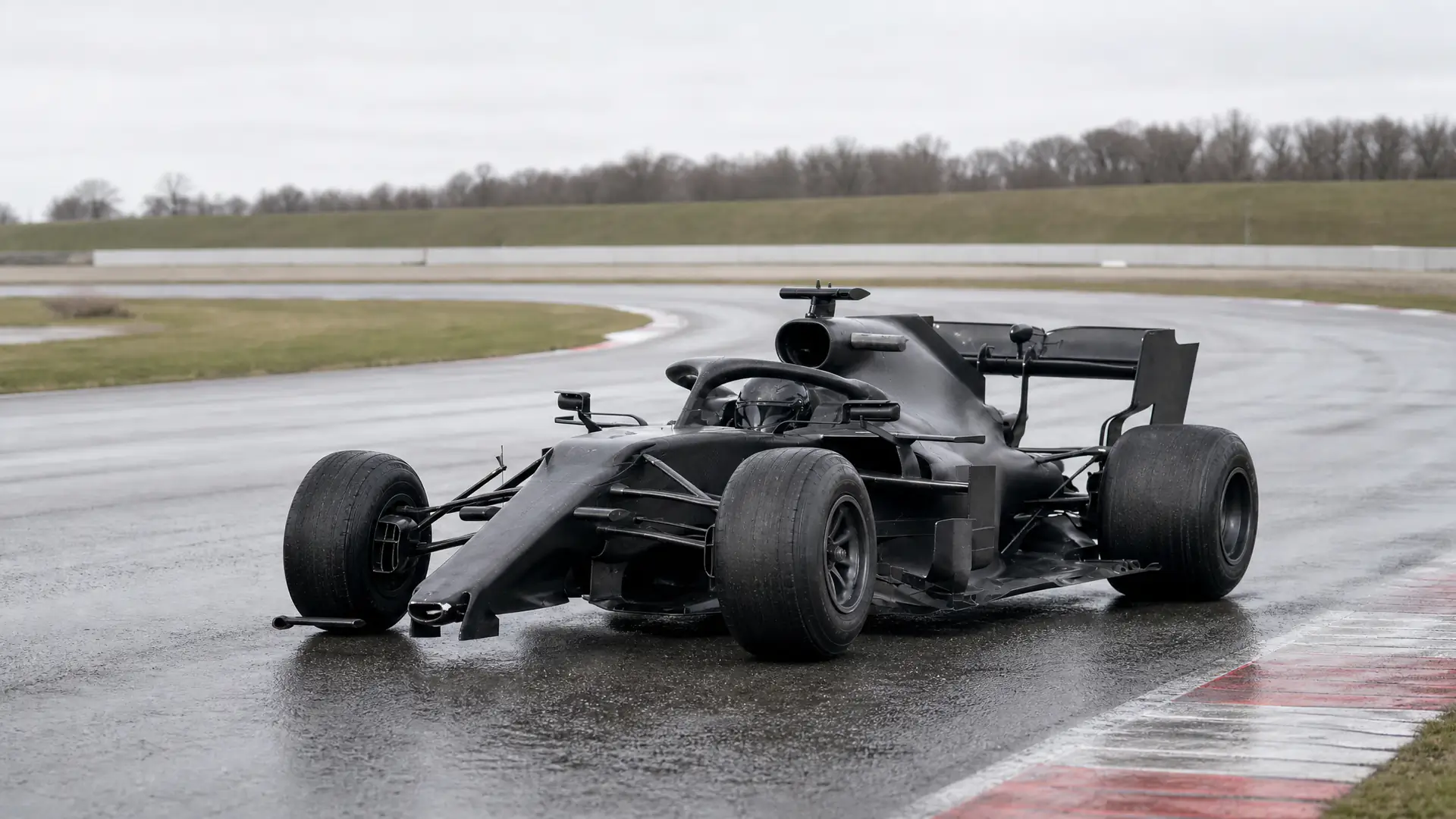
Max Verstappen crashed on the lap to the grid at the 2020 Hungarian Grand Prix, twenty-three minutes before the formation lap. Red Bull had less than a minute to decide where the car went next.
The player comes from YouTube, which then receives your IP address and may store data in your browser. Nothing loads until you press the button. Press play in the player to start the film.
Could Red Bull repair Verstappen's car on the grid?
- Running time
- 9:50
- Sources
- 21
- Narration
- AI voice
- Published
17:43
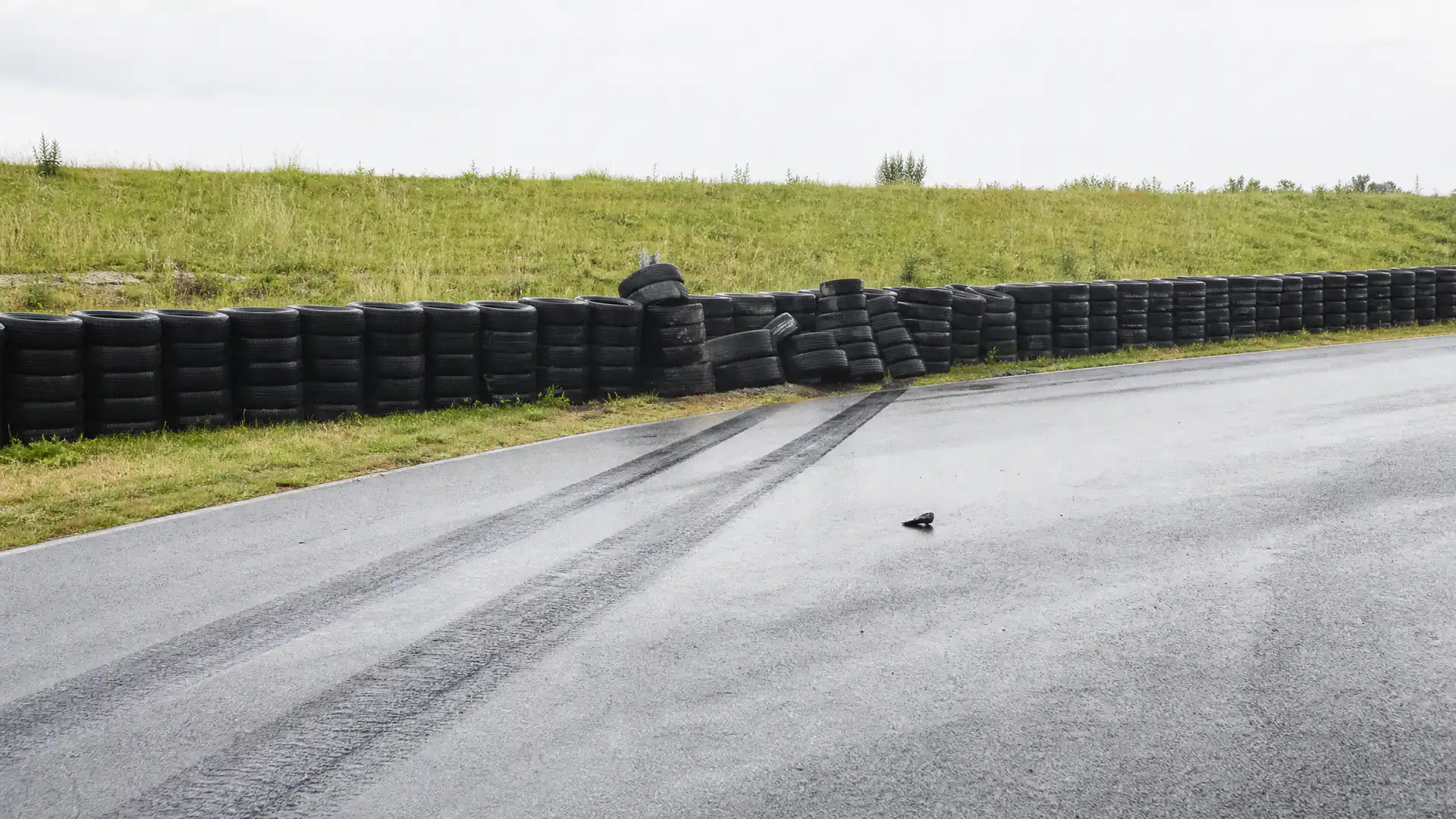
Yellow in track sector 15. Verstappen has gone into the barrier at turn 12, on the lap to the grid.
14:47:17 local time. FIA race control, Formula 1 timing data, Red Bull Racing
17:32
He has reversed out. The garage means a start from the end of the pit lane. The grid keeps seventh place, if he gets there under his own power.
14:47:28. Formula 1 timing data, Christian Horner, 2020 Sporting Regulations, Article 36
16:51
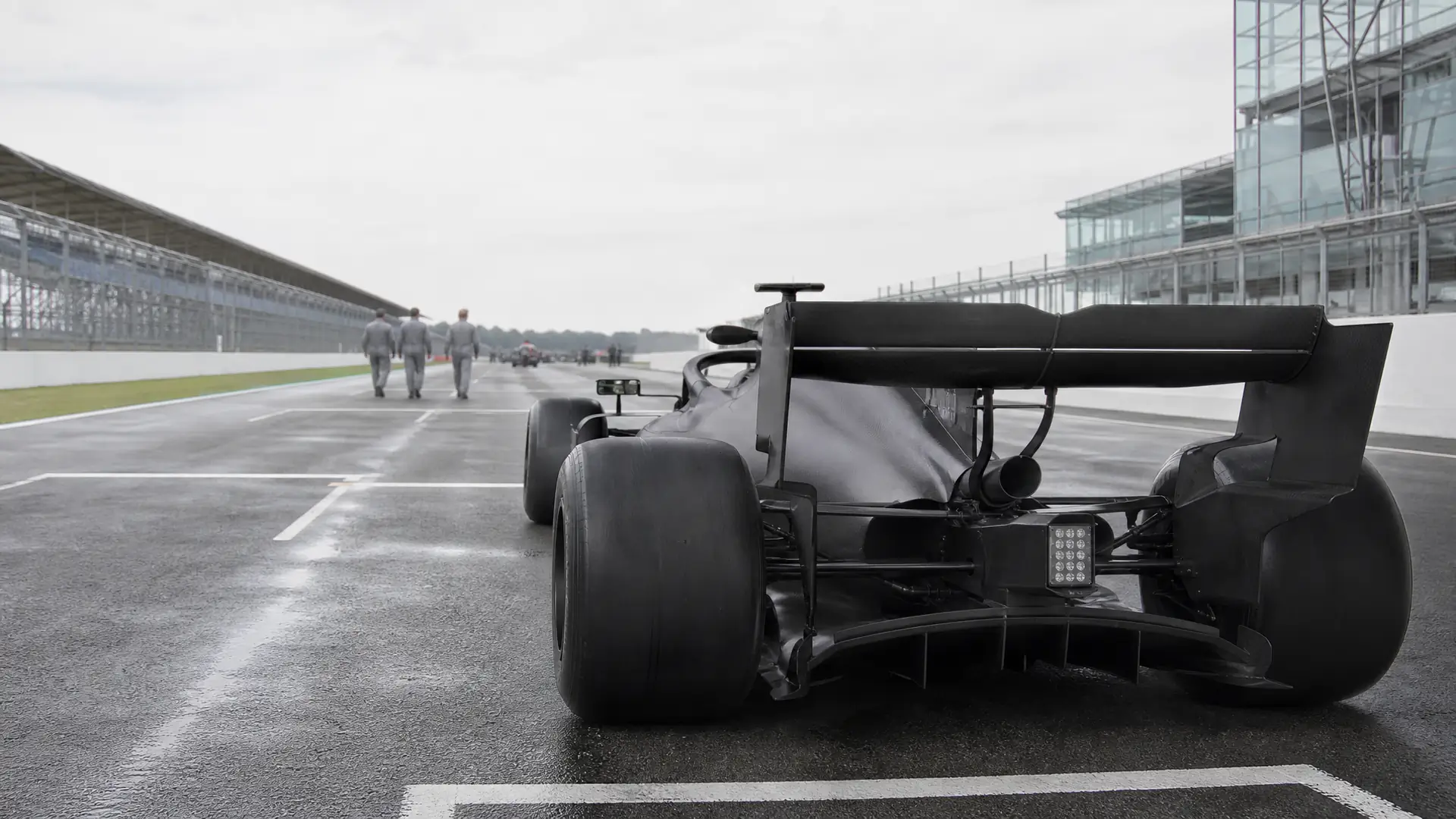
Red Bull send him to the grid. He stops at the back of it, engine off, as the rules require.
14:48:09. Formula 1 timing data, Christian Horner, 2020 Sporting Regulations, Article 36
14:58
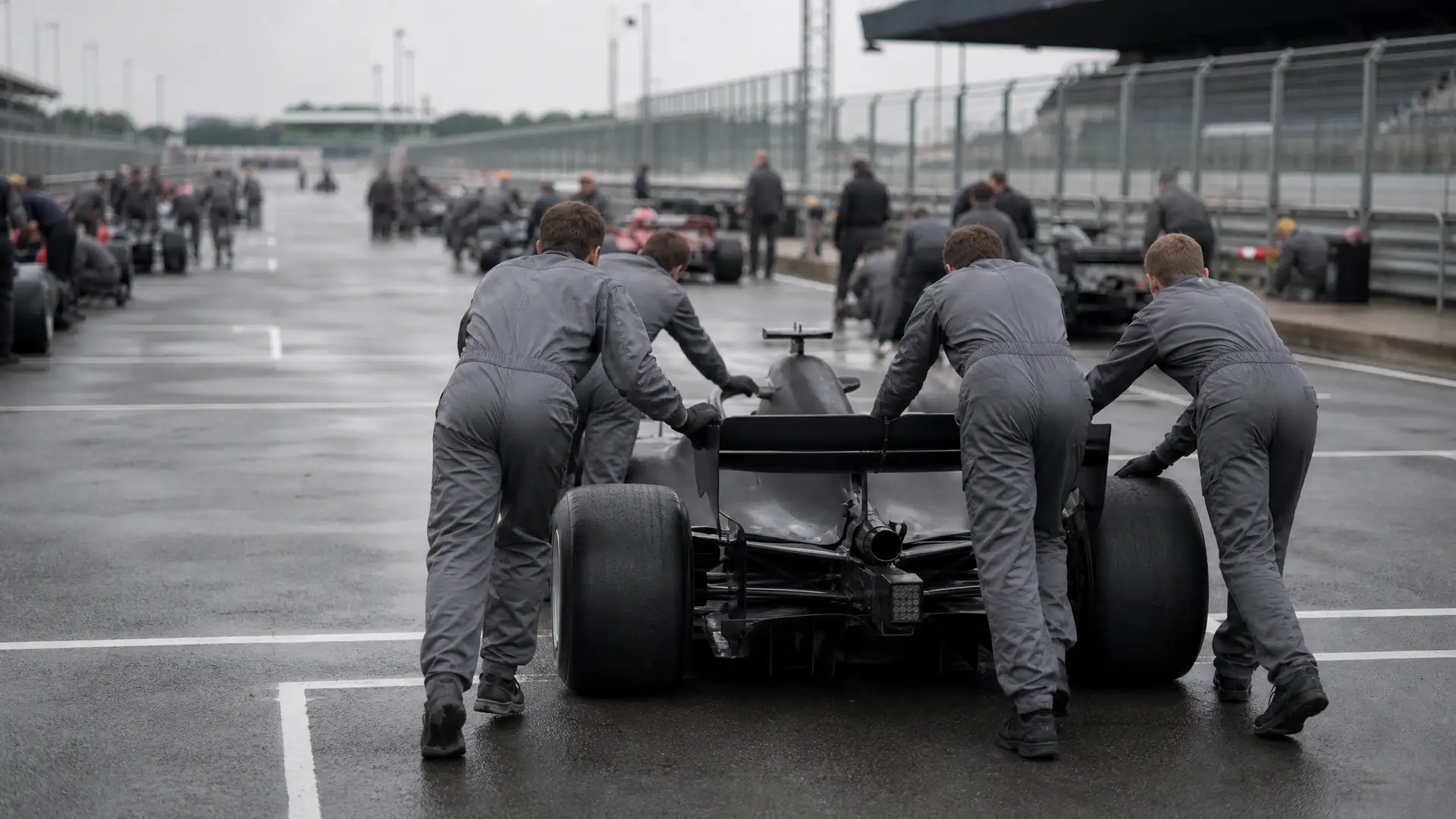
Without a front wing the car cannot be jacked up, so they push it. While they push, the pit exit closes.
14:50:02. FIA race control, Red Bull Racing
14:38
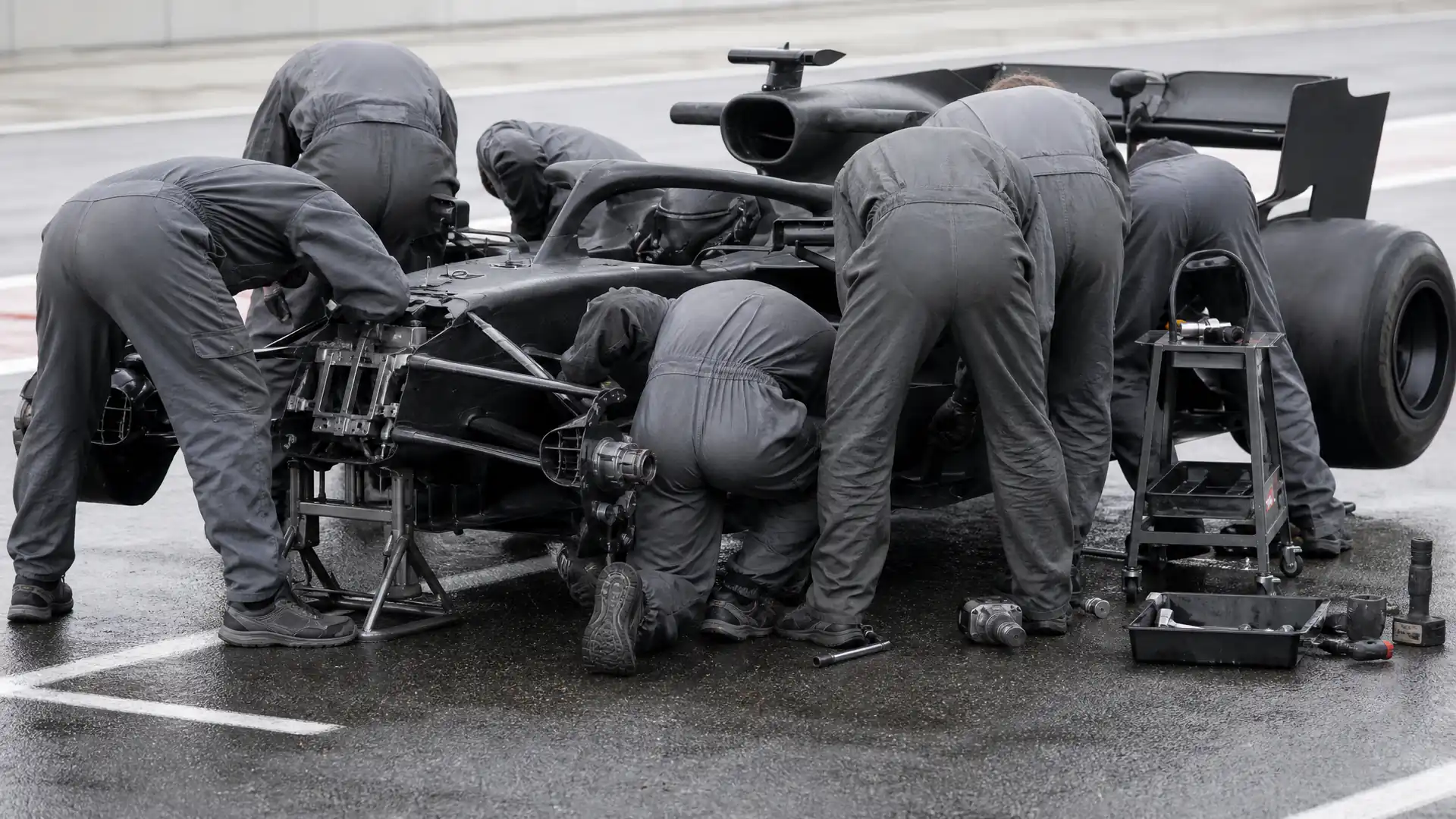
The car stops in its grid box. The job is the front wing and nose, the left front track rod and the left pushrod.
14:50:22. Formula 1 timing data, FIA Document 51
11:00
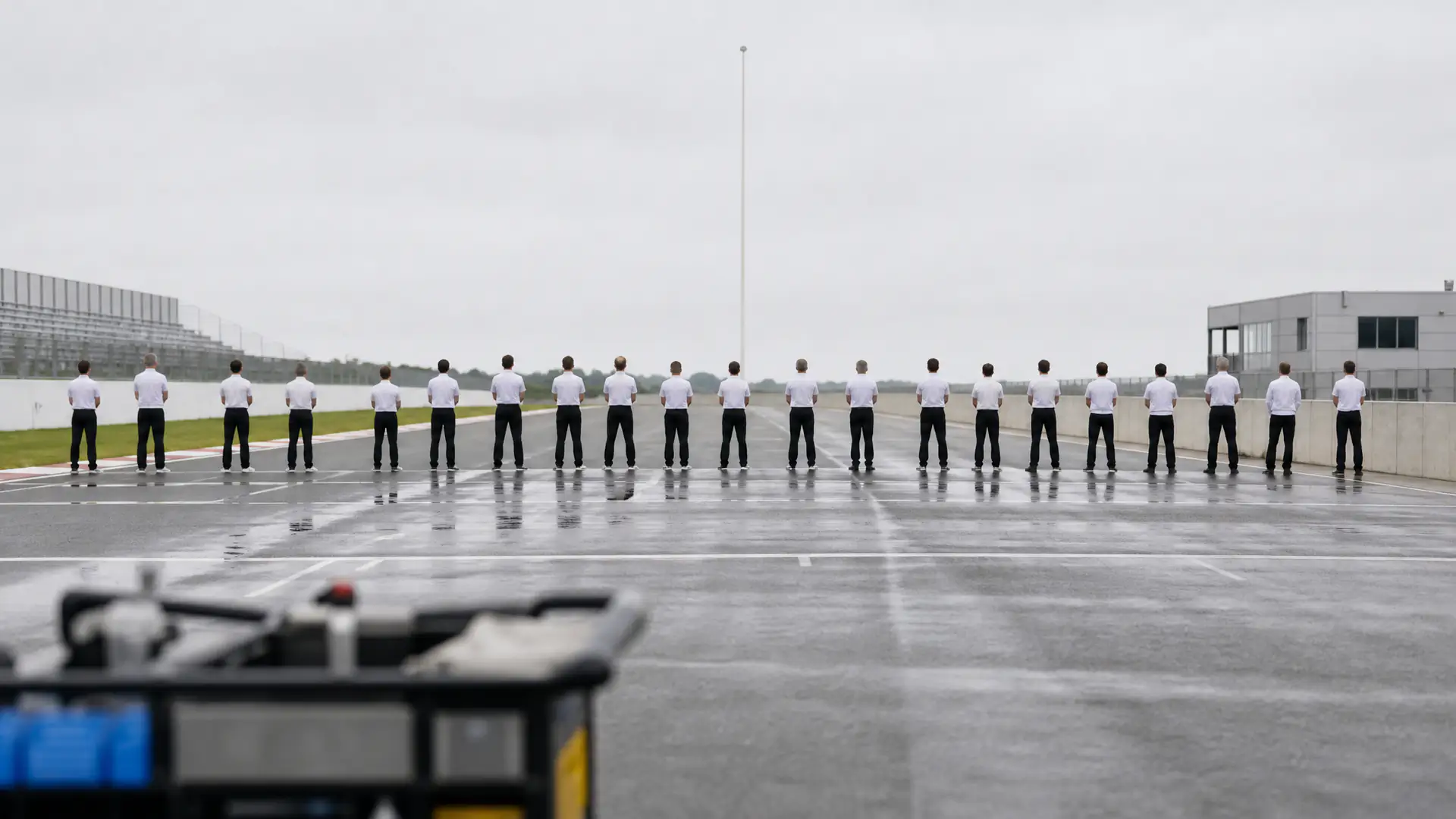
The national anthem plays, and Verstappen has gone to stand for it. On this car the track rod attaches inside the chassis, behind a bulkhead.
Formula 1 film Inside Story. Red Bull Racing. Mark Hughes, formula1.com
09:21
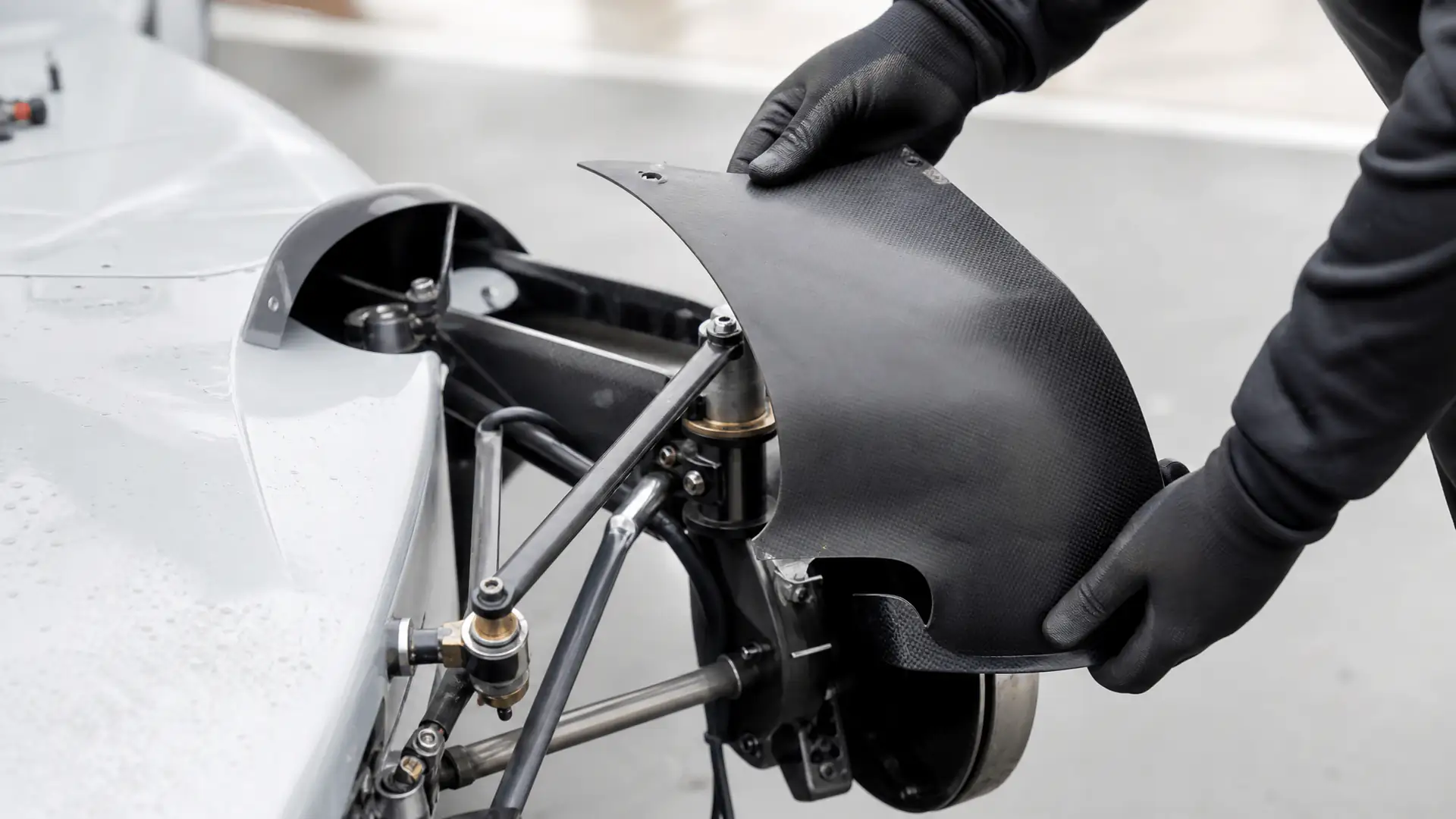
The whole brake duct fairing has come off to reach the outer end. Almost everything is off. Nothing has gone back on.
Motorsport.com. Formula 1 film Inside Story
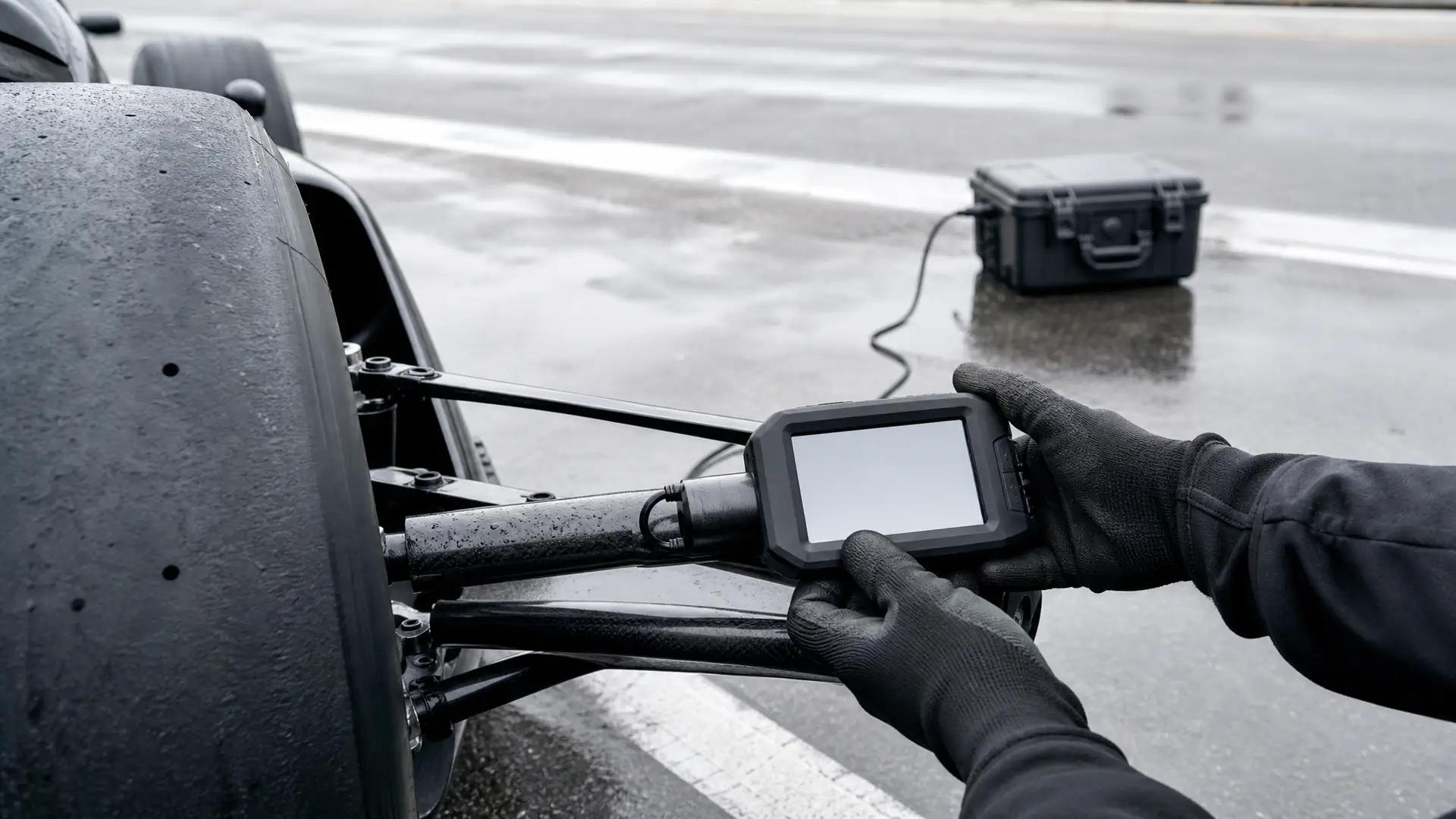
07:00
Chief engineer Paul Monaghan calls for equipment to test what is still on the car. If the wishbone is hurt, all of this has been for nothing.
On Motorsport.com's timeline. Red Bull Racing
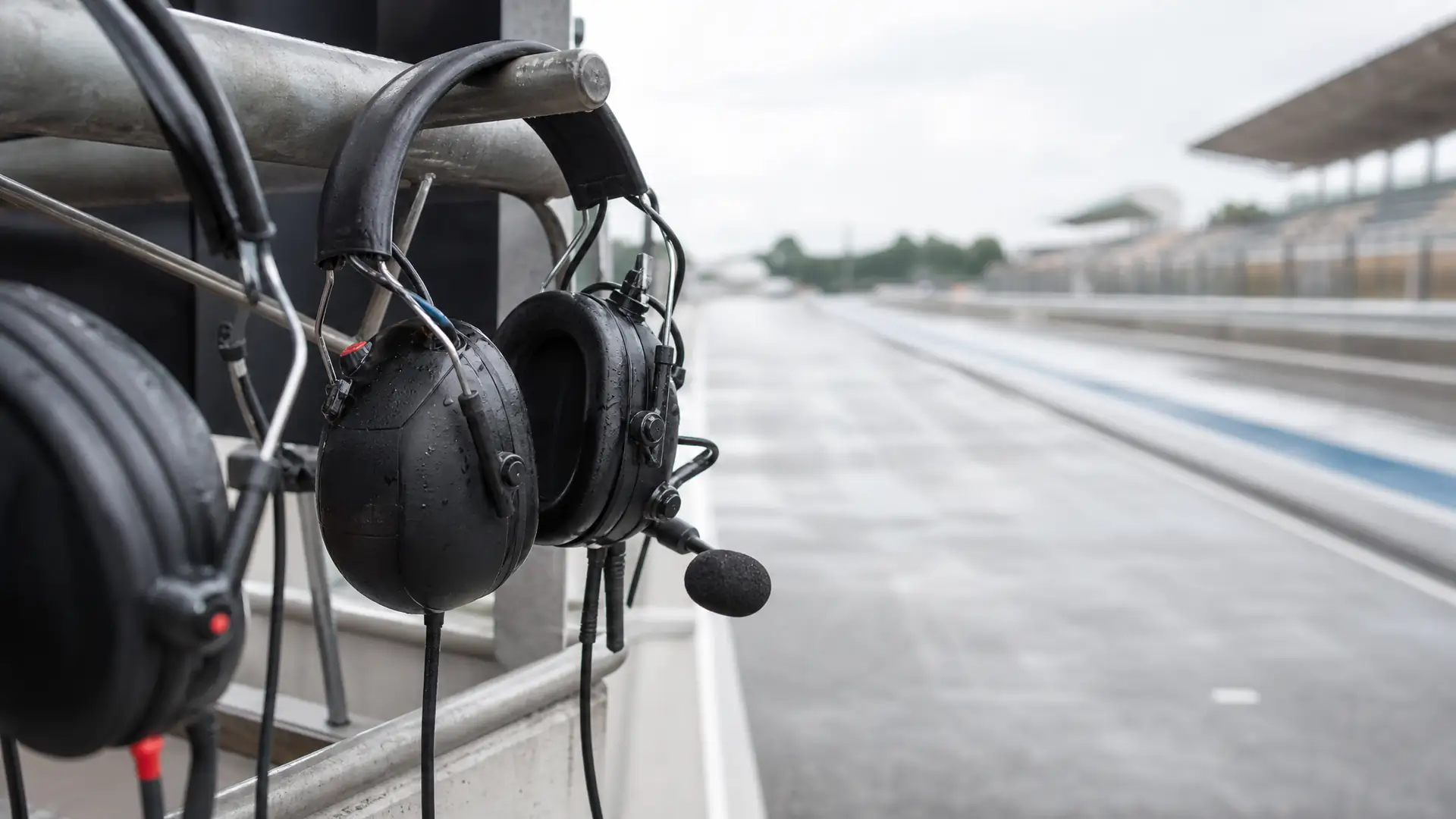
05:38
A second line, one minute past the signal. If the car is not finished by then, they pull it off the grid.
Formula 1 film Inside Story. One minute past the signal is this film's reading
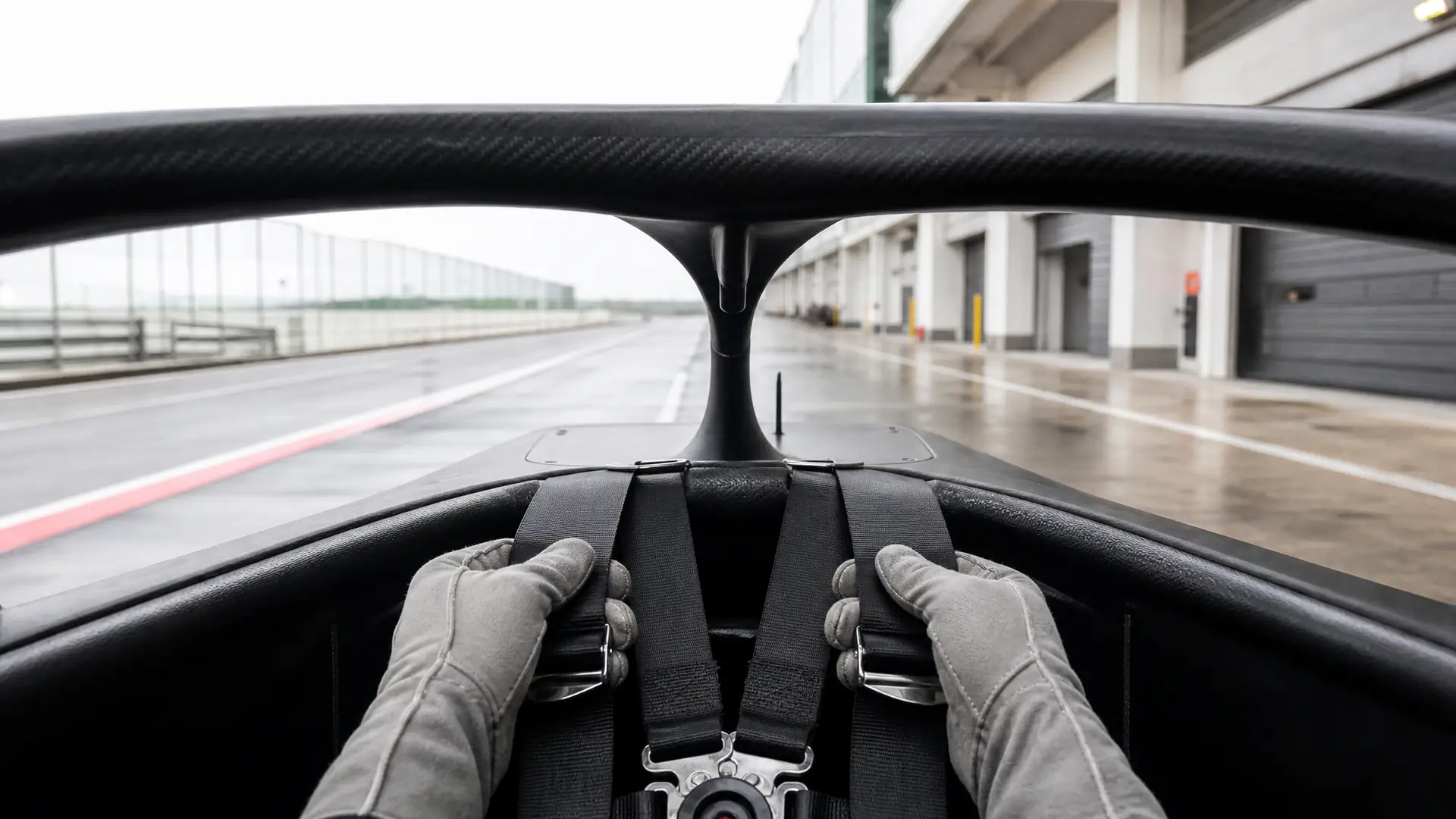
05:00
Verstappen comes back and straps himself in. Four or five mechanics are still on the front left suspension.
Motorsport.com
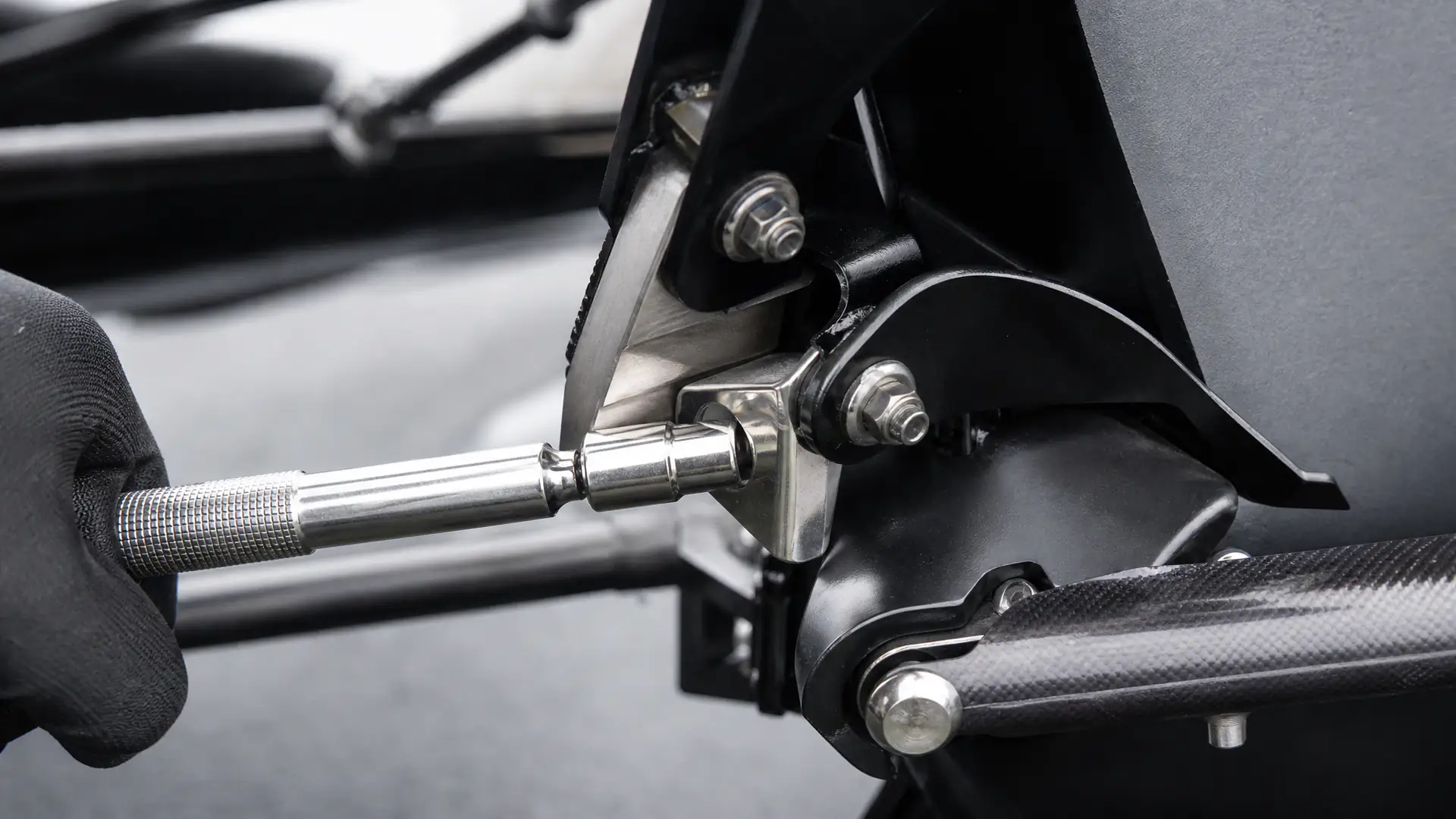
03:00
The last bolt goes into the pushrod. The car still has no nose, no brake duct and no left front wheel.
Motorsport.com
From here on, this page gives the ending.
The film in brief
- Max Verstappen crashed on the lap to the grid at the 2020 Hungarian Grand Prix, at turn 12 on a wet track, twenty-three minutes before the formation lap. The FIA's race report says he broke his front wing and damaged his front left suspension.
- Red Bull could bring the car to the garage, which meant a start from the end of the pit lane, or send it to the grid, where Verstappen would keep seventh place. Christian Horner, then the team principal, wrote that they had to decide quickly. They sent him to the grid.
- Mechanics pushed the car 134 metres to its grid box. That left fourteen minutes and thirty-eight seconds to the five-minute signal, due at 15:05 local time, when every car on the grid must have its wheels fitted. The FIA's technical delegate listed the parts replaced: the front wing and nose, the left front track rod and the left pushrod.
- Horner said that work would usually take an hour and a half. The team's chief mechanic put it at forty to forty-five minutes, in the garage, in a hurry. Under the rules of the day, a team could replace a part on the grid without asking first, as long as the broken part stayed in full view of the scrutineer assigned to the car.
- The FIA wrote that every car had its tyres fitted at the signal, and there was no penalty. How close it was depends on who tells it: Horner said about twenty-five seconds, Motorsport.com twenty-six, formula1.com around thirty. Verstappen rose to third at the start and finished second, 8.7 seconds behind Lewis Hamilton.
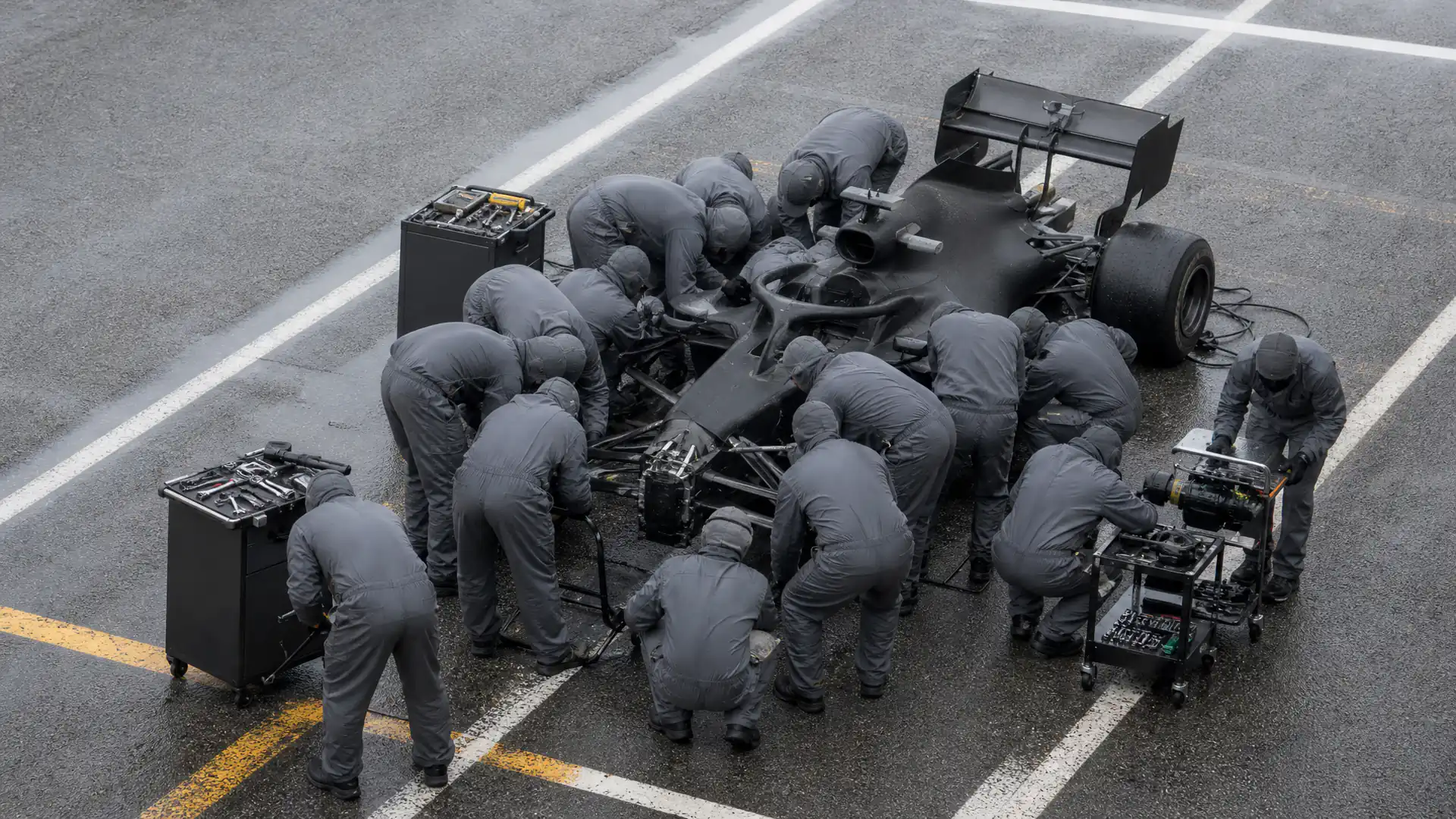
Heroes of the window
The mechanics of car 33
A job of 40 to 45 minutes in the garage, their chief mechanic said. Done in under 15, in the grid box.
The window for the decision was less than a minute. The window to get the car ready was seventeen. On the grid, you can change parts without asking first. You cannot ask for more time.
What this film does not say
- That the crash was a mistake. This film gives what the timing data show, what Max Verstappen said and what Christian Horner wrote, and passes no verdict.
- That gear sync was the reason for eighth gear, as a fact. Horner wrote that Verstappen was trying to synchronise eighth gear. Red Bull's guide to the race start says drivers learn the gears early in the formation lap. That the one explains the other is this film's reading, and no source says it in one sentence. The data show which gear was selected, not a completed synchronisation.
- How many seconds were left, as a fact. Horner said about twenty-five, Motorsport.com twenty-six and formula1.com around thirty. The clock in the film stops where the wheel goes on in the Formula 1 film Inside Story, and between its marked moments it runs faster than real time.
- That missing the signal would have ended Verstappen's race. The rules gave a ten-second stop-and-go. The line that would have stopped the repair was the team's own, and placing it one minute past the signal is this film's reading of the team's count in Inside Story.
- That Red Bull asked the FIA for permission, or got it. The rules allowed the repair without asking first, and no document says whether anyone spoke to the FIA on the grid.
- Who on the pit wall made the call. Horner wrote that "we made the call". In Inside Story Jonathan Wheatley voices a decision, which does not say he took it alone.
- How many people worked on the car. Peter Windsor counted fourteen mechanics, Motorsport.com put four or five on the suspension at one moment, and the sources give no official number.
Transcript
Verstappen crashes on the way to the grid
The Hungarian Grand Prix, July 2020. The race has not even started, and Max Verstappen has already crashed.
It happens on the lap to the grid, on a wet track. Two hundred and forty-nine kilometres an hour. He shifts into eighth gear, and a quarter of a second later, he brakes. Six gears down in less than a second and a half. The brake comes off, then on again. He goes straight on, into the barrier.
Verstappen later said he thought his race was over. On the radio, he tells his team what is broken.
A broken front wing. A damaged front left suspension. And twenty-three minutes to the formation lap.
Red Bull have less than a minute to decide where that car goes next.
Why eighth gear on a lap that does not count
Why eighth gear, on a lap that does not count? Christian Horner, then the team principal, later wrote that Verstappen was trying to synchronise eighth gear on the run down to turn twelve, which meant going flat out.
Red Bull's own guide to the race start says that early in the formation lap, a driver tries to learn the gears, priming the shift system by staying in each one for a certain time, at a certain torque. Lose the sync, and it costs. Three years earlier in Baku, Verstappen lost gear sync on his last qualifying lap, and said he was losing a lot of lap time on the straights.
But on the formation lap that afternoon, not one car reached eighth. In the race, Verstappen would next use it at nearly three hundred kilometres an hour.
The same guide calls the lap to the grid the final chance to practise with the car. The timing data show six of the twenty drivers slipping into eighth on the way there. Verstappen was the last, less than a kilometre from the grid.
Horner added that the track was more slippery than Verstappen thought, and the tyres were pretty cold. Verstappen said he locked up, came off the brakes, and locked up again.
Garage or grid: the call
There are two places that car can go.
The first is the garage, for a more controlled repair. But the pit exit closes at ten to three. A car still in the pit lane after that starts from the end of the pit lane, and only joins the race once the whole field has gone past.
The second is the grid. The rules say a car may only start from the grid if it gets there under its own power. Get there, and Verstappen keeps seventh place. Then the repair has to happen on the grid, against the clock.
Horner wrote that they had to decide quickly. On the screens they could see that the track rod and the pushrod had gone. What they could not tell was whether the wishbone or the upright had gone too. If it had, he wrote, that was game over.
In Red Bull's own account, the Hungaroring is a track where position is vital. They sent him to the grid.
134 metres at walking pace
He has already reversed out of the barrier. Now he drives on, in first gear, never faster than ninety-five kilometres an hour. At twelve minutes to three, he stops at the back of the grid. Engine off, as the rules require.
Normally, Red Bull's chief mechanic said, a car is put on skates at the back of the grid and rolled to its place. Without a front wing, they could not jack it up. So they pushed it. One hundred and thirty-four metres, at walking pace.
While they push, the pit exit closes.
Twenty seconds later, the car stops in its grid box.
Now the line. At the five-minute signal, every car on the grid must have its wheels fitted. Miss it, and the penalty is a ten-second stop-and-go in the race. Usually, that line is the three-minute signal. In 2020, it is five.
The signal is due at five past three. That leaves fourteen minutes and thirty-eight seconds.
The repair against the clock
Jonathan Wheatley, on the pit wall, asks chief mechanic Phil Turner how long it will take. In Formula One's own film of the repair, Turner answers that it will probably take longer than they have, and that they will try. Wheatley tells Helmut Marko they will have to do it faster than they have ever done it.
Motorsport.com reported that Mercedes told Lewis Hamilton the car could not be repaired on the grid.
The governing body's technical delegate later listed the job. The front wing and nose. The left front track rod. The left pushrod.
Horner said that would usually take an hour and a half. The team's chief mechanic put it at forty to forty-five minutes, in the garage, in a hurry. In the grid box, they have less than fifteen.
The journalist Peter Windsor counted fourteen mechanics at the car. The 2020 rules had cut the number of people allowed on the grid, so spare parts came by relay, people running from the garage to a gate and passing them across.
The rules allow the repair. A team can replace a part on the grid without asking first, as long as the broken part stays in full view of the scrutineer assigned to the car.
Eleven minutes left. The national anthem plays across the circuit, and Verstappen has gone to stand for it. He later said he was very calm. Let's see if they are going to make it.
The hard part is the track rod. Mark Hughes wrote on Formula One's own website that on this car, it attached to the steering rack inside the chassis, behind a bulkhead. On every other car, the rack was out in the open and easy to get at. Horner said you would need to be a sensational piano player to work your fingers in that space.
Then the outer end. To reach it, the whole brake duct fairing has to come off. Nine minutes left, and almost everything is off. Nothing has gone back on.
In the same film, Wheatley asks how long they can keep going and still get the car off the grid.
Seven minutes left, on Motorsport.com's timeline. Chief engineer Paul Monaghan checks what is still on the car and calls for equipment to test it for stress. Red Bull says parts that looked undamaged were X-rayed. If the wishbone is hurt, all of this has been for nothing. Horner wrote that the results came out fine.
Less than six minutes left, and the film catches the answer. A second line, one minute past the signal. If the car is not finished by then, they pull it off the grid.
Five minutes left. Verstappen comes back and straps himself in. Four or five mechanics are still on the front left suspension.
Three minutes left. The last bolt goes into the pushrod. The car is structurally whole again. It still has no nose, no brake duct and no left front wheel.
The five-minute signal
Forty-six seconds left. The wheel is still not on. Verstappen said he could see the mechanics screaming at each other to put it on.
In the film, the pit wall calls thirty seconds. The wheel goes on.
How close they came depends on who tells it. Horner said about twenty-five seconds. Motorsport.com said twenty-six. Formula One's own website reported around thirty. The governing body wrote that evening that every car had its tyres fitted at the signal. There was no penalty.
Mechanics from other teams applauded Red Bull's crew off the grid.
But nobody has driven it. The steering and suspension were set up on the grid, without the usual precision tools and without a level floor. Horner said they knew it was safe, and they knew it was not going to be ideal.
At nine minutes past three, the engine starts. At ten past, the car moves under its own power for the first time in twenty-two minutes.
Verstappen said he spent the formation lap checking the wheels. For the chief mechanic, seeing the car through the first corner, with the driver saying everything was fine, was an even bigger relief than the wheels going on.
The lights go out
The lights go out. Verstappen starts seventh. Twenty seconds later, he is third.
Fourteen minutes after the five-minute signal, the same crew is waiting in the pit lane for Verstappen's first stop. Horner put it at two seconds.
Early in the race, Hamilton is told who is behind him. On the radio, he has a question.
Verstappen finishes second, eight point seven seconds behind Hamilton. He said second felt like a victory. Ross Brawn, then running the sporting side of Formula One, called the repair as extraordinary and impressive as anything he had ever seen. On the slow-down lap, Verstappen told his team who he had to thank.
The window closes
The window for the decision was less than a minute. The window to get the car ready was seventeen.
On the grid, you can change parts without asking first. You cannot ask for more time.
Sources (21)
- FIA documents 35, 37, 51 and 56
- FIA 2020 Sporting Regulations, Issue 9
- FIA race report, 19 Jul 2020
- FIA press conference, 19 Jul 2020
- Formula 1 timing data and FIA race control messages, own calculation
- Jolpica, pit stops
- Formula 1, Inside Story, 15 Jan 2021
- Red Bull, Bulls' Guide To: Formula One Race Start, 27 Aug 2020
- Christian Horner's column, 23 Jul 2020
- Red Bull, Matt Youson, 29 Jul 2020
- Motorsport.com, Piola and Somerfield, 27 Jul 2020
- Mark Hughes, Tech Tuesday, 28 Jul 2020
- Formula1.com, Verstappen, 19 Jul 2020
- Formula1.com, Horner, 20 Jul 2020
- Ross Brawn's column, 20 Jul 2020
- Jolyon Palmer's analysis, 21 Jul 2020
- Formula1.com, Baku, 24 Jun 2017
- Autosport, Luke Smith, 19 Jul 2020
- ESPN, Laurence Edmondson, 19 Jul 2020
- GPblog, Peter Windsor, 20 Jul 2020
- Track: © OpenStreetMap contributors
Credits and corrections
Direction and editorial responsibility: Paul Veth. Published by Entistar B.V.
AI drawings of the car, and the car in the AI scenes, after a photo by Jen Ross (CC BY 2.0, adapted): commons.wikimedia.org

Engravings after Wikimedia Commons photos, adapted: Max Verstappen by Steffen Prößdorf (CC BY-SA 4.0): commons.wikimedia.org

Christian Horner by Ben Sutherland (CC BY 2.0): commons.wikimedia.org

Narrated by an AI voice. Some scenes, the drawings of the car, the music and the sound effects are AI-generated; the charts and documents are built from the sources above.
The car in the images on this page: AI-generated after the same photo by Jen Ross (CC BY 2.0, creativecommons.org/licenses/by/2.0), adapted.
Corrections: none so far. If you find an error, write to [email protected].
Get the next file by email
One email when a new file opens, with one detail from the dossier that did not make the film.
The latest file
The Ticket
Who got the better deal: the ten teams that were paid, or the newcomer that paid them?